9.2026
(Heads up: this might be a bit of a long post! I’ve written about Dwelt in a few places — such as here and, more recently, in this journal entry — but I’ve never taken the time to lay everything out in preparation for actually making the game. If you’re reading this, I really appreciate that you would stop by for a little while and take a look. Thank you so much!)
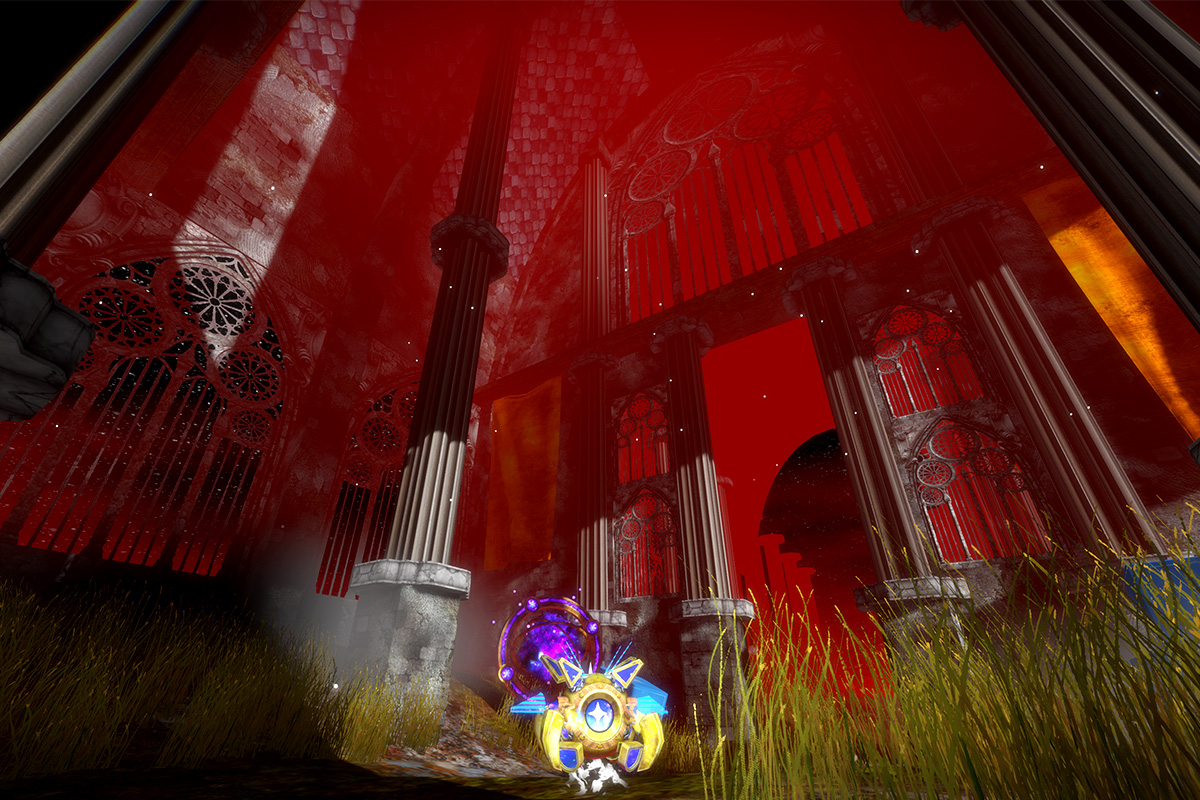
Up until recently, Dwelt has been more of an umbrella term for a collection of game-oriented thoughts, ideas, characters, songs, and sketches I’ve collected over the years, than it has a fully-fledged game. You can see a little of its origins on my old site. During these explorations I was seeking a specific vibe, one encompassing “the memory of the land”, and the space between loneliness and solitude. Dwelt started off being about spirits shepherding the archived souls of the dead, before the concept of robots started to take hold in a more concrete way, and I have done a few design and implementation experiments by now!
Robots are powerful vessels for themes of memory, connection, and identity. Mechanical creatures who gain sentience or who process emotions in a different way to humans face unique personal journeys and trials; and our own experiences of the world can be understood through their experiences and struggles. I was very glad to be able to experiment with this in Jade Spring, where the jade bot you play as has returned from conflict in Inner Nayos, badly damaged and in need of rehabilitation. While the small size of the game didn’t afford too much room to expand on these themes, I was still able to have them reflect on this healing process, especially through their conversations with the robotic golem Ratchet, who was also saved by the Jade Spring’s steward, Raiqqo.
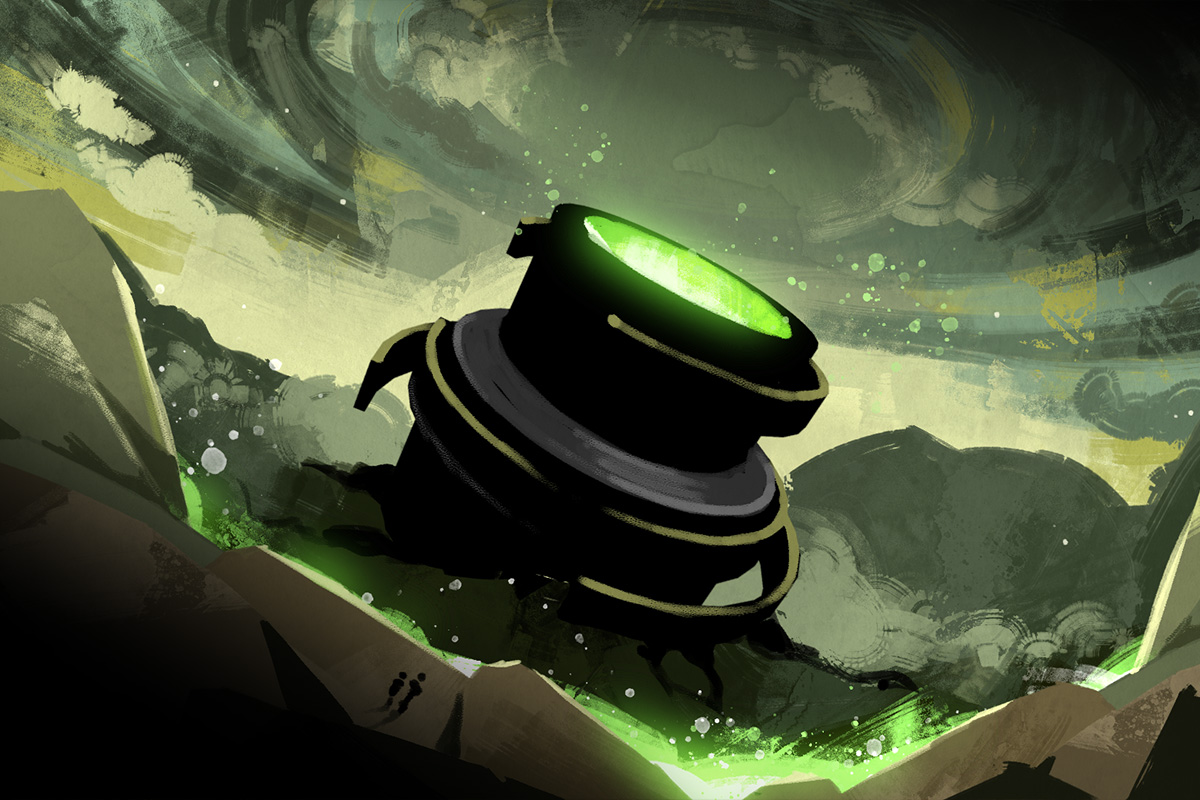
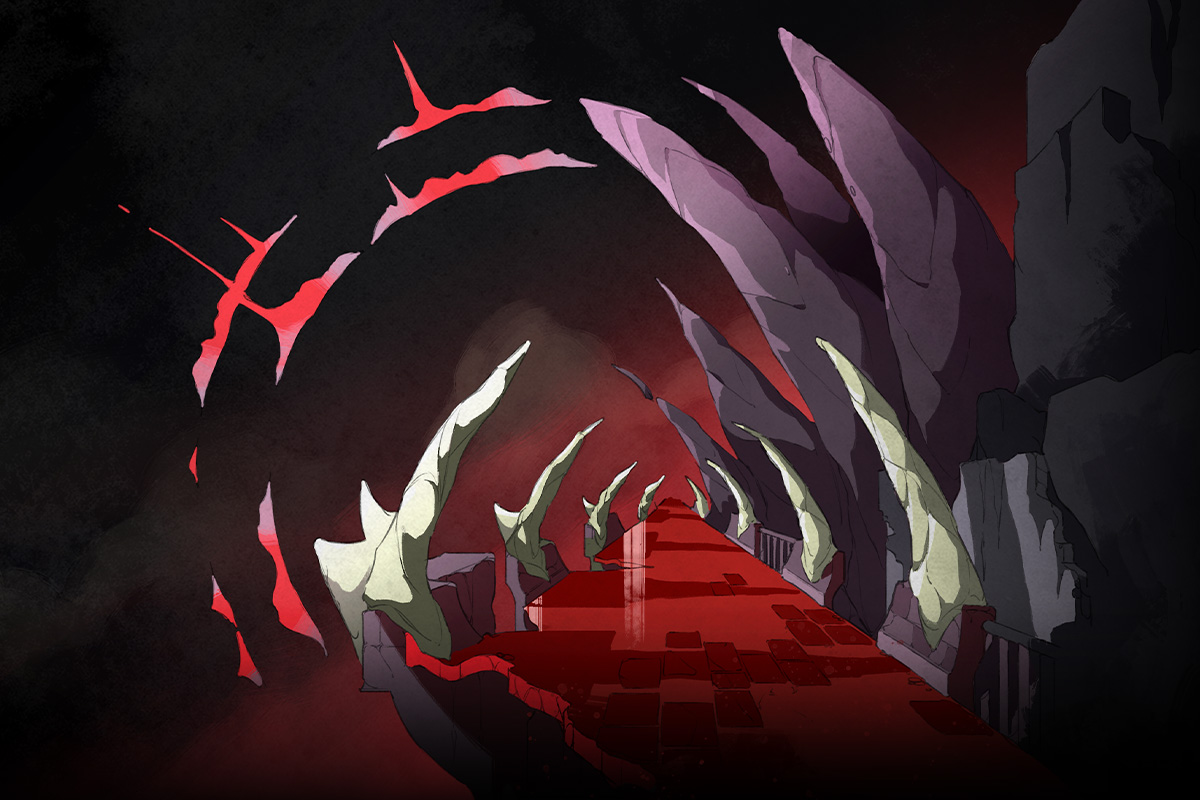
And now, with Dwelt I want to further reflect on these ideas. The game takes place at an inflection point in an inter-continental steampunk war, one in which different factions have been wielding brass weaponry, machinery, and vehicles in order to wrest control of key magical and alchemical hotspots across the land. You are one such piece of machinery, a robotic armature created to build and repair military bases and equipment for your faction.
The war culminates in the trading of devastating alchemical missiles which shake the earth to its core, as the ley-lines they are fighting for cascade out of control in sympathy with the now-wounded biomes in which they are nestled. The factions, seeing the writing on the wall, undertake mass evacuation plans, ships and freighters fanning urgently out into space — but the armatures, including you, are left behind. As the EMPs and magical flares recede, you slip into a long, deep sleep, freed from the impositions of your war-time programming, but still burdened with the memory of it.
You awaken to a changed self, in a changed world. The land is both beautiful and dangerous, wounded and flourishing, bearing the deep scars of war but vibrant with natural magic left unchecked. The world is yours, and yet it has been abandoned. And you, too, are fully your own; but what is your purpose now? The war has dissipated (and with it your strict robotic edicts and restrictions), but your predilection to build and engineer still run strong. So, purposeless and alone (for now), what do you do? Dwelt is about answering that question.
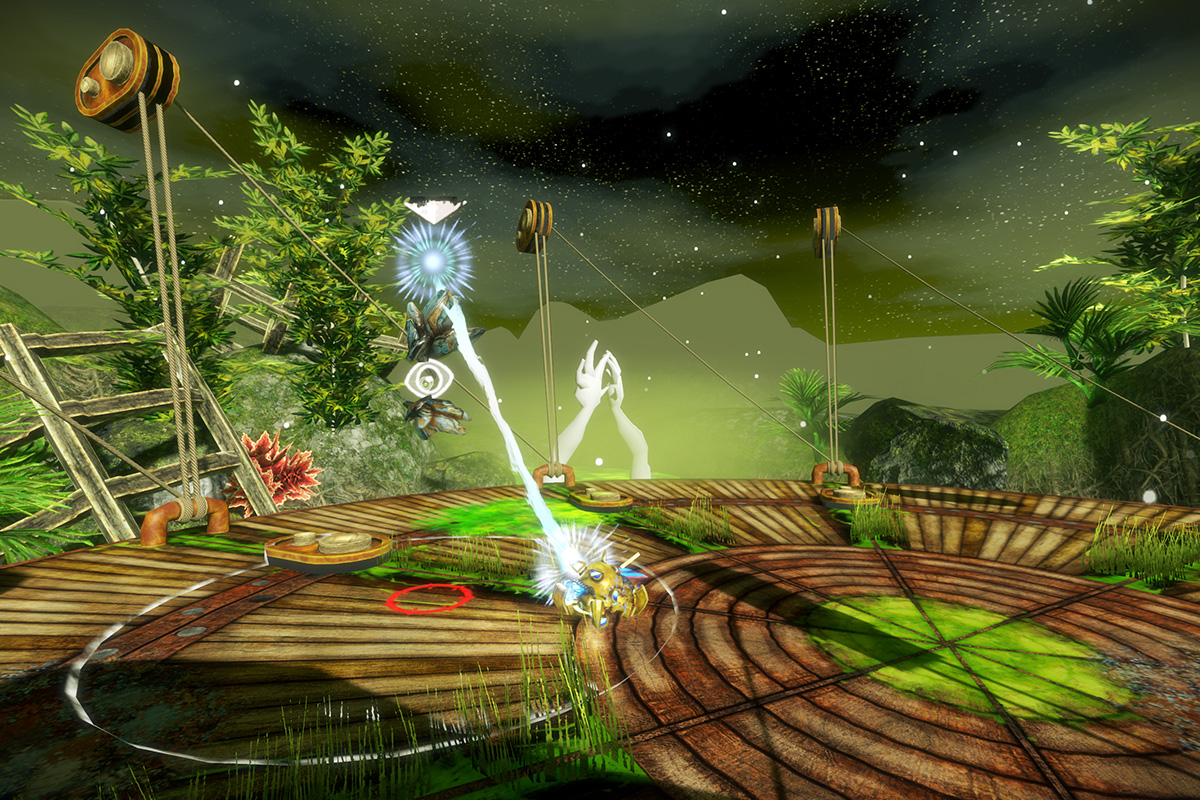
Dwelt is purposefully a modest expansion of Jade Spring’s mechanics in terms of gameplay! I’m trying to be quite intentional and insistent on not ballooning the scope of the game way outside the realm of something achievable for me. The game experience is split into map instances called shards. Each shard reveals the story of its landscape — how it was shaped, how it was altered by the war, and how you can heal it, here and now. Much like the garden in Jade Spring can be weeded and cleared out until it is fully cleansed, each shard has a series of blights which need to be gotten rid of, and will drop currency and contribute toward decorations specific to that region. You can then use those decorations to freely build in a “hub” shard.
Map friction is defined by blights, and map progress is measured with insights. The equivalent of blights in Jade Spring would be weeds, bug swarms, and dragonvoid; they give the shard its sense of both life and danger. To clear them is to heal the land. As you traverse the map, shards progressively grow more challenging to clear. The first might just be fires you have to douse, or piles of rubble to clear — things you can do with little setup or urgency. Later they could become creatures, mechanical war-beasts, reinforced siege components, and the like. More complex and difficult blights would require you to place utilities, understand synergies, dodge projectiles while you cleanse them, and more. The rewards for progressing through this main aspect of the game are two-fold. These blights drop currency which can be used for unlocking decorations to be used in the shard or in your hub shard, and they also drop favour, a special currency which represents the work you have done to cleanse the land.
Spread throughout the shard are insight pylons which represent a certain revelation or unfolding of understanding of what is happening (or has happened) in that shard. Each costs a certain amount of favour to use and, once unlocked, will play a cinematic or some dialogue (and possibly unlock some more unique decorations, too).
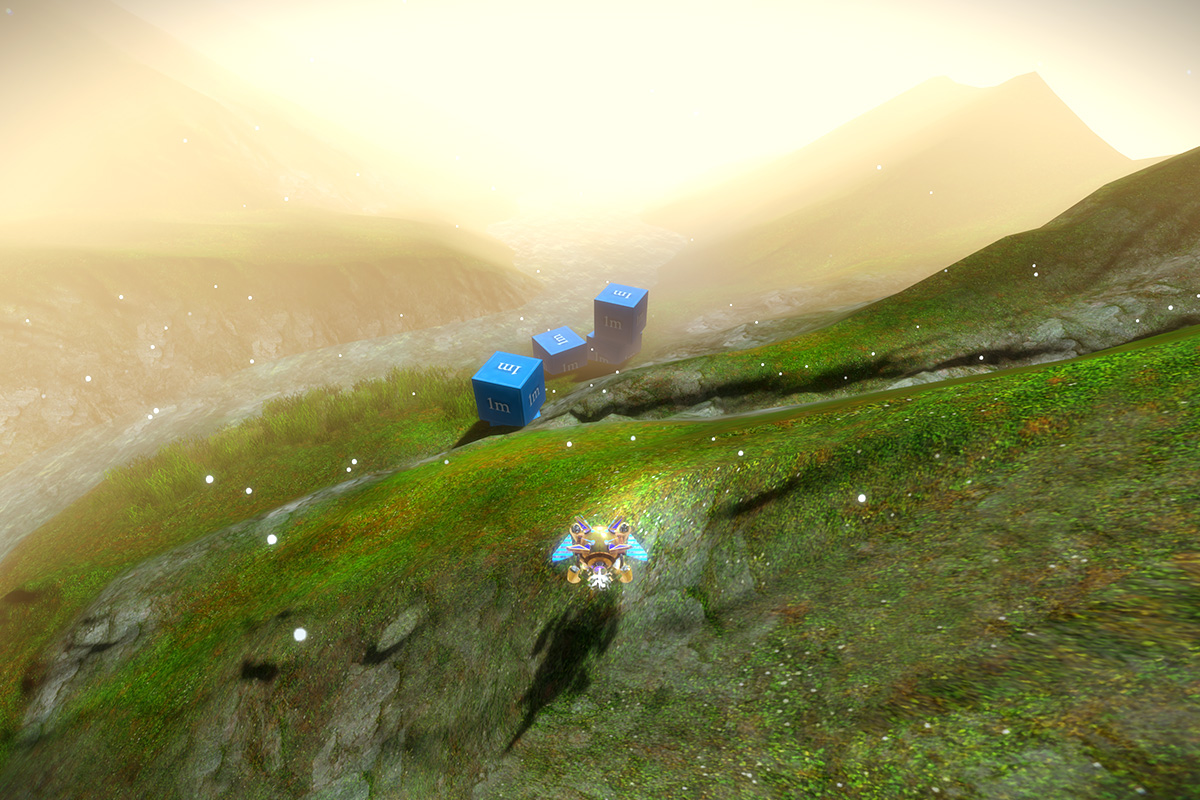
This second video game has been challenging! Without prior lore and work to rely on (like Jade Spring enjoyed), I’ve been drawing on all the little side-projects I worked on in the past, and it’s slowly been coalescing into a workable concept. One thing I feel a lot more confident on than last time is the overall structure and layout of the programming — the part that allows me to slot new mechanics and content into the game in a modular way. That’s a problem I have with Jade Spring : I was learning so much while making it that some of its code is really bad and tangled up, which makes it harder to improve and develop now. Dwelt, on the other hand, is a lot better sorted into independent modules, especially into the long term.
My main struggle now, rather than being the engineering (though I’m sure this will get more challenging later), is with developing the world and the game’s design — what the mechanics actually are, and the pacing of what the player actually does. And because I’ve settled on making a small vertical slice in order to test and get feedback on the game, there is a lot of work that needs to be done in order to even get to that point. Dwelt really depends on its vibe and setting, though (perhaps even more so than its pure mechanics or mechanical balance), so that’s why I chose to produce a vertical slice rather than an MVP.
At this stage I’ve got all the core movement and world components worked out, either from scratch, or developed out of Jade Spring tools and mechanics. There’s an armature that you can control, gadgets which get loaded asynchronously, and a network of effects which can be tracked and passed to different entities, including the player. I’ve done a lot of environment work on this first vertical slice world, and have been writing up its background so I can develop the gadget blights that exist there, journal entries, insights, and other assets. Next, I really need to get the core loop complete — placing a utility, clearing a blight, collecting its currency, and advancing the story. Doing this will give me more confidence in completing the rest of the vertical slice. (When I get stuck or anxious, I like to shift over to the art, music, and story-writing side of developing the game, so this dynamic is working quite well for me.)
Thank you so much for reading and getting this far! It took all winter to find my feet with Dwelt, but now I’m starting to feel more confidence in working on it and just having fun with it. I really appreciate all of your support in following my progress!